At the end of 2022 we were told the UK would be in recession, but now we’re not. Why can’t we predict the future?
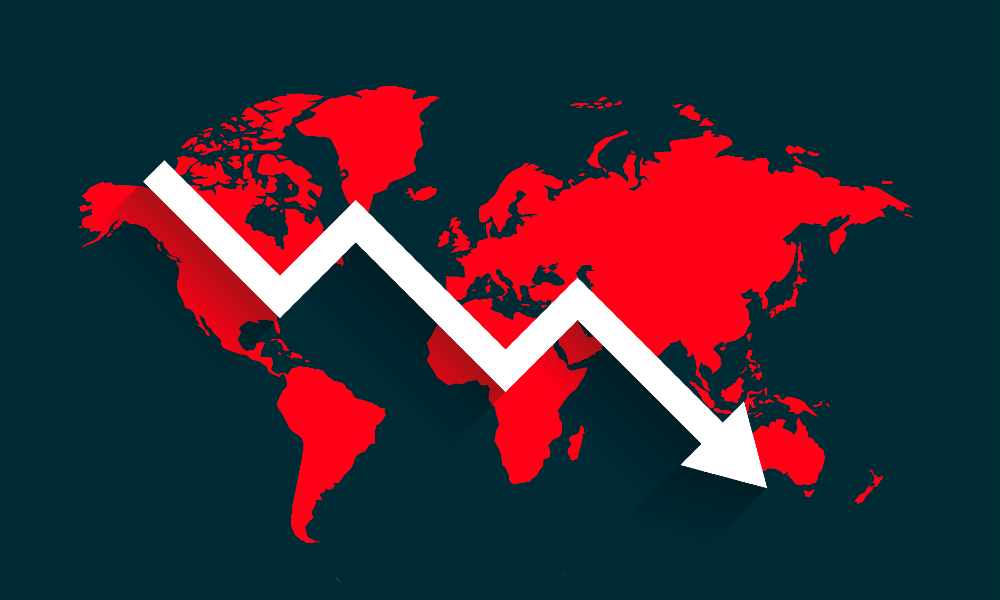
Towards the end of 2022, many esteemed institutions like the IMF predicted the UK would be in recession. They predicted it, based their institution’s considerable academic weight, with great certainty. Last week, we realised (although by the skin of our teeth), that we’re in fact NOT in recession (0% growth means that technically we’re not in recession, as recession is TWO quarters of negative growth.
That said, 0% growth has been duly lauded by the Government as a success. Funny that.
Almost as soon as the actual growth figures (or lack of them) was released, the aforementioned institutions clamoured to get their ‘new’ predictions out for the next quarter and 2023. Yep, you guessed, it “This time, the UK will DEFINITELY be in recession”.
the IMF believes the British economy would shrink by 0.5 per cent between the final quarter of 2022 and the final quarter of this year – after having previously said it would grow in 2023 by 0.3%
Former Cabinet minister Jacob Rees-Mogg was quoted as saying, ‘This is a forecast, and when was the IMF forecast last right? You’ve got to understand that forecasts are not historic fact.” He also suggested last year after OBR forecasts were wildly out, “Mystic Meg’s predictions are more accurate.”
Agree with Mr. Rees-Mogg or not (and not many do) it was also revealed this week that the IMF predictions come with a huge caveat; their predictions are given with a margin of error of a staggering +/- 3%! Really? In terms of our economy, that is laughably incomprehensible.
One of the tutorials on here is on authority bias and talks to our reluctance to challenge ‘experts’. When you see institutions like IMF and OBR failing to get things right, even with a HUGE margin of error, we have to ask, why is forecasting SO difficult.
There are probably a number of biases going on here. Notwithstanding the authority bias, there is a desperate need to control the future (see illusion of control) and forecasting is seem as an attempt to at least predict the future so we can control it.
However, how many times have we forecast things like the weather and got it hopelessly wrong) or failed to predict huge events such as the 2008 financial crises or the pandemic. Many, like the WHO did predict a pandemic (but the normalcy bias saw to us failing to plan sufficiently for it).
So, if we can’t reliably predict the future, why? Well, it may well be that it simply makes us feel better. Believing we can predict events, particularly negative events, makes us feel better prepared for them, even if we aren’t.