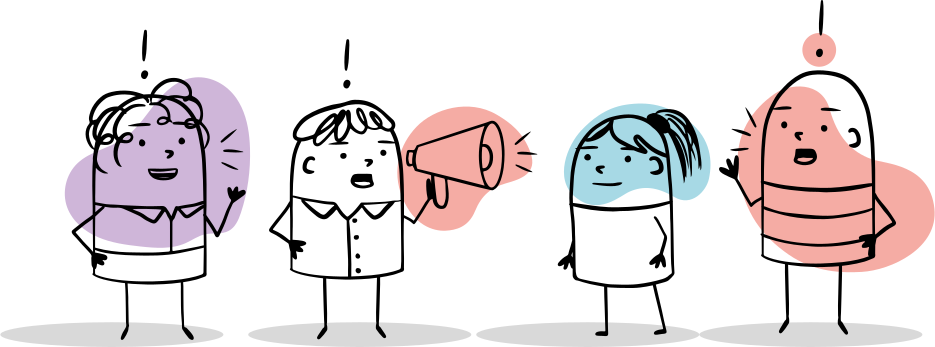
What is it: in situations where there are groups or teams, poorer, more risky decisions can be made, because nobody wants to be ‘that guy’ who speaks up…
I know this decision is a poor one, but I am not going to be the one to say so and lose my job…”
Overview
Groupthink is a cognitive bias that occurs when a group values harmony and conformity over critical evaluation. It leads to poor decision-making as individuals suppress dissenting opinions to maintain group cohesion. This phenomenon often emerges in environments where group loyalty or authority figures dominate, resulting in a lack of independent thinking and the illusion of consensus.
Groupthink can be particularly harmful in professional settings, where critical analysis is essential. Teams may overlook potential risks, dismiss creative ideas, or fail to question flawed strategies because members feel pressured to align with the majority. This bias played a significant role in historical events like the Bay of Pigs invasion, where critical voices were overshadowed by the desire for unity.
Understanding groupthink helps individuals and teams recognise the importance of open dialogue and diverse perspectives. By fostering an environment where questioning is encouraged, teams can mitigate the negative impacts of groupthink and make more informed decisions.
What can we do to avoid this?
Like many cognitive biases, as soon as we’re aware of them, we’re less likely to fall foul of them. Groupthink is more prevalent in, obviously, groups. As such, it’s a good idea to allow opinions to be aired, outside of the group, or at least, anonymously.
- Encourage open dialogue and constructive dissent – this has some overlap with Authority Bias, where individuals are often reluctant to challenge figures in positions of power, or traditional authority.
- Assign a “devil’s advocate” in group discussions – this could be someone who is independent; a ‘Chairman’ or arbitrator.
- Seek input from external experts to challenge assumptions, but beware, when challenged, many people will also then fall foul of Confirmation Bias, where they will simply look for evidence they are right, and you are wrong!
Examples
- A team unanimously agreeing on a flawed product concept to avoid conflict in the business. Projects with multiple stakeholders are prone to groupthink, because nobody wants to be ‘that guy who was negative and brought down team morale’, by stating the bloody obvious.
- Ignoring a team member’s concerns during a project planning session. We tend to dismiss one person’s opinion, as an ‘outlier’ or not relevant. Remember, just because only one person says it’s a bad idea, it doesn’t mean they’re wrong.
Takeaways
Risky or unwise decisions are often made by groups, because nobody speaks up.
Allow individuals to speak out, without repercussions.