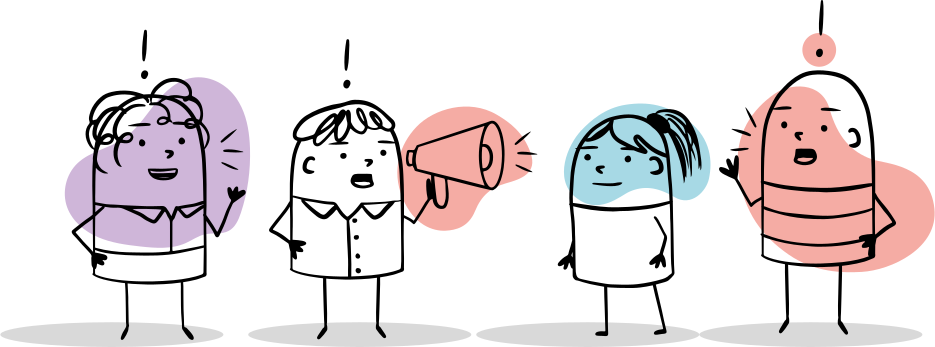
What is it: people with low ability in a task overestimate their competence, while experts may underestimate theirs…
I’ve been asked to create a AI algorithm. I’ve never done it before, but how hard can it be…”
Overview
The Dunning-Kruger Effect, in more simplistic, and possible controversial, terms, is ofter cited as, “Why do stupid people have all the confidence and all the clever people have all the doubt?”
First identified by psychologists David Dunning and Justin Kruger in 1999, the effect highlights a paradox of learning; to recognise one’s own incompetence requires a certain level of competence.
In other words, people who know the least about a topic often lack the insight needed to realise how little they know. Conversely, experts understand the complexity of the subject so well that they’re more aware of what they don’t know, which can lead to self-doubt or imposter feelings.
In professional settings, this bias can distort team dynamics, performance reviews, and leadership selection. Overconfident but under-qualified individuals may dominate discussions or make risky decisions, while genuinely capable colleagues hold back their insights. The result is an organisation that rewards confidence over competence.
You often see in business that those with great confidence are promoted ahead of those with great knowledge, because they make unrealistic predictions of their own success.
What can we do to avoid this?
This is one of those biases where simply knowing it exists isn’t always the cure. There are a number of ways for managers and leaders to identify and reduce this effect though.
Actively valuing experience and making teams mixed, with experience and youth, is important, as is valuing evidence over opinion.
Also, try to foster a culture of reflection, allowing people to admin, “I don’t know” and rewarding humility.
As an individual, ask yourself, “If it’s that easy, why isn’t everyone doing this?”
One point to make though is, status and position isn’t always a guarantee of competency; have a look at Authority Bias.
Examples
- Businesses promote those who predict great outcomes, based on unrealistic confidence, ahead of those who are more realistic, based on their greater knowledge.
- New investors will often make dangerous and dubious decisions, based on a lack of understanding. Another bias, ‘Beginner’s Luck’ often makes this worse, because those with little experience don’t see that either!
Takeaways
Low skills can bread overconfidence.
Self awareness is learned.
Learn to feel confident saying, "I don't know but I'll found out!"